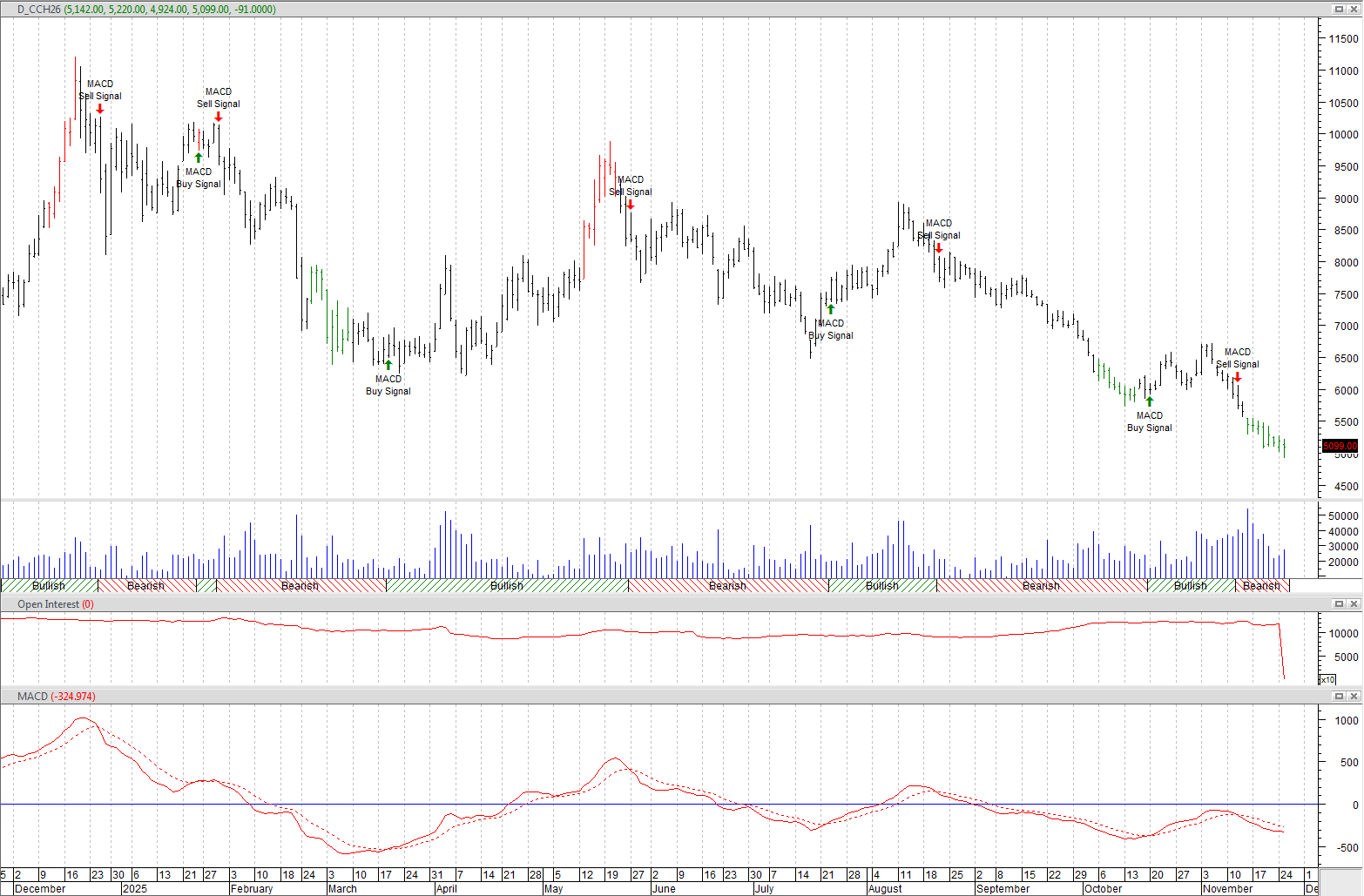
11-20-2025: March Cocoa: Cheaper for Grocers to Give the Stuff Away
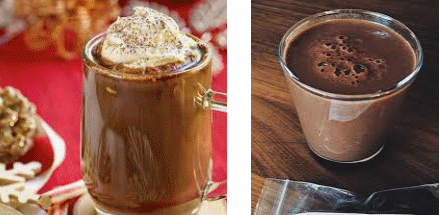
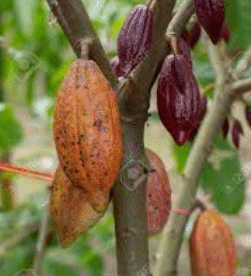
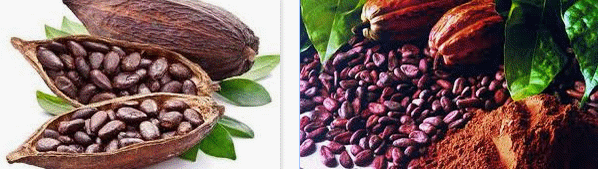
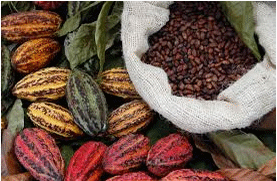
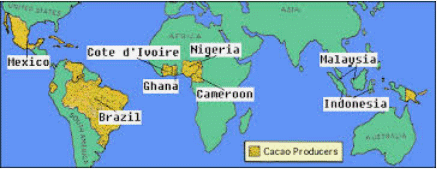
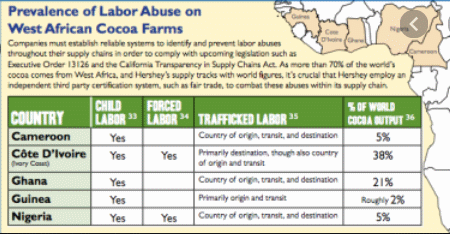

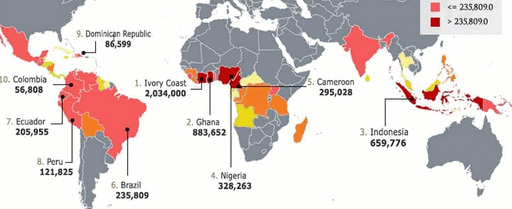
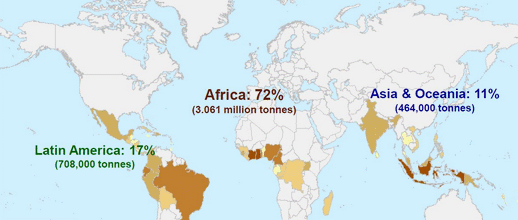
Cocoa prices to wholesalers are getting slashed worldwide on overproduction in Africa. So why is chocolate so expensive in America? We will give you one guess why the rest of the world is emjoying lower chocolate prices while Americans suffer. Yes! It's thd big over-stuffed guy in what's left of the White House, and his lackey appointees in the Republican "big, beautiful" party like the little weasel in the House of Representatives acting as "speaker" and doing little or nothing to honor is pledge to serve and defend the Constitution. A recent "relent" on cocoa tariffs may not be enough to undo all the damage caused to supply chains worldwide, especially as affects America. If you listen to Trump, who controls markets every time he shoots off his mouth (will they ever learn?), maybe you can latch on to his tail to do a little "insider trading" but the world of commodities is less valnerable to lies and distortions because all that is known about cocoa is pretty much out there, unlike insidious "insider trading" in the stock market. Commodites "react" a little slower and more cautiously to chaotic government interventions.
When grocery chains can't sell gourmet chocolate candy because prices are too high, why do they donate the stuff to food banks rather than just lowering their prices?
1. They don’t want to “train” customers to expect lower prices.
If a $6 gourmet chocolate bar suddenly sells for $1, people will wait for markdowns in the future. That permanently damages the brand and the store’s pricing power.
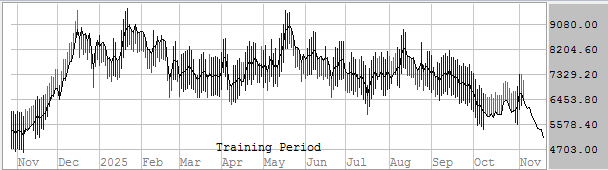
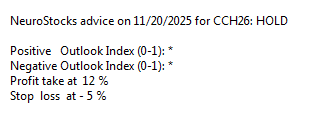
We fed Cocoa into a neural network to get the following result:
March Cocoa:
March Cocoa:
Introduction
2. Premium brands forbid deep discounting.
Many specialty food brands have contracts that disallow major price cuts because it cheapens the product’s image. Stores can get in trouble with the supplier for dumping it at 80% off.
3. Donations often bring a tax deduction near wholesale value.
In the U.S., companies can deduct the “enhanced deduction” for food donations —
typically cost plus up to 50% of the markup.
That’s more money than they’d get if they slashed prices and sold it for pennies.
4. They avoid angering customers who paid full price last week.
Huge markdowns make loyal shoppers feel ripped off and may trigger complaints or refund requests.
5. It protects shelf space and brand image.
Luxury items sitting in a clearance bin look like failures. Donating keeps the “premium” aura intact.
6. It’s simpler for operations.
Accounting for large price cuts, signage, labor, markdown systems, etc. costs time and money.
Donation = one step, and often automated.
7. They also score goodwill and positive PR.
“Supporting the food bank” is better optics than “stuck with overpriced candy.”
Intramarket Analysis
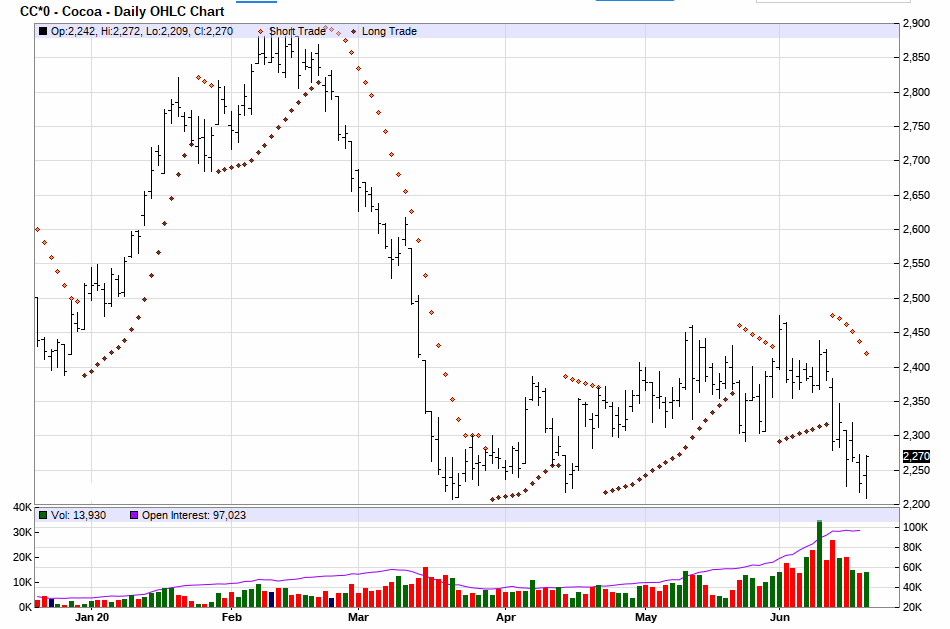
Parabolic Chart
Moving Average Divergence Convergence (MACD) Chart