
Introduction Nirvana Internal Progrm Historic Range
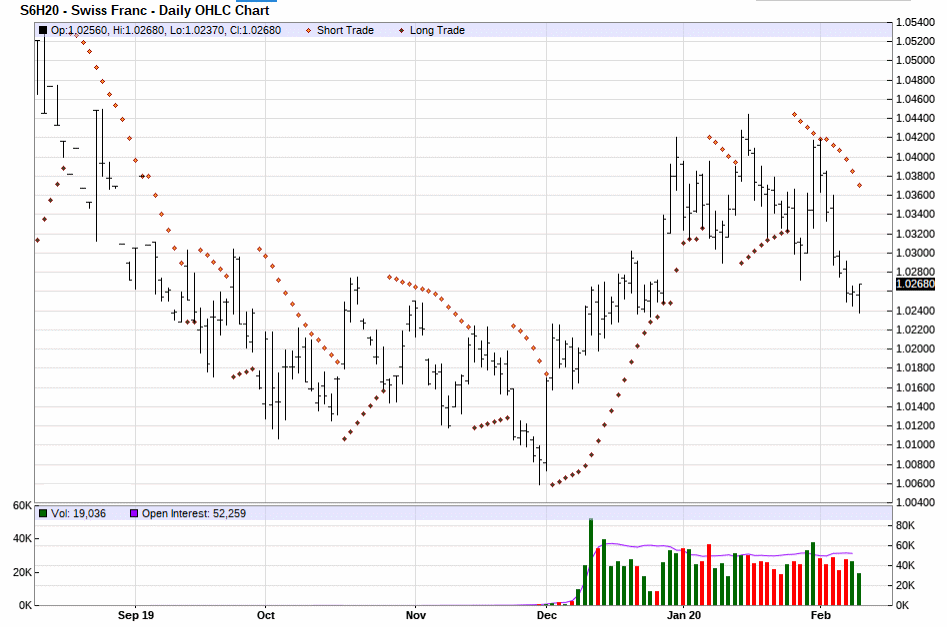
But apparently, that's just not the way currency trading works. And it is claimed if the SNB gets rid of negative rates, it could spark a huge jump in the Swiss exchange rate. Apparently, what is happening is a change in sentiment. The Swiss Franc is considered a "safe haven" currency because of stability and financial condition of the SNB. But at the same time, there is also a "risk on" change in sentiment as equity markets continue to be strong. We think the "risk off" sentiment will re-emerge, but not in time to save the Swiss Franc from correcting to reflect the condition of negative rates and devaluation of the Franc encouraged by SNB intervention.. We also think the current technical chart pattern reflects this. Recent "risk off" sentiment appears to be changing to resume a downward path for the Franc.
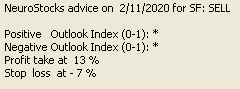
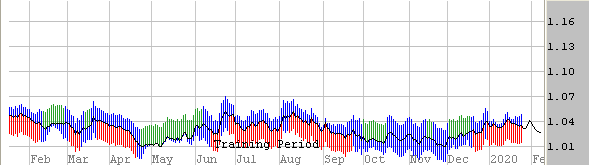
We fed the Swiss Franc, Euro Currency, and British Pound into a neural network to get the following result:
March Swiss Franc:
02-13-2020: March Swiss Franc: Risk-Off Sentiment Gives Way to Strong Equity Markets
(Click on links below. Whole page needs to load before links work.)
Intermarket
Parabolic
News
Point & Figure
Cyclic/Seasonal
Third System
Margin
Commitment
Volatility







Introduction
A question which has plagued us is why investors would want to place their money in a bank that charges them 0.5% interest for the privilege of doing so. This "negative interest" concept should turn off most investors in our opinion, when they could be drawing interest on their money in some of the other currencies. Worse, some think the negative interest could go to -1.0% if the Swiss National Bank decides it is necessary to encourage inflation in order to make Swiss exports more competitive.
Intermarket Analysis

Parabolic Chart
March Swiss Franc:
Nirvana Chart
The Swiss Franc has been falling lately on signs of the Swiss central bank intervening to stop it rising further. This outweighed concerns about the spread of a new coronavirus that have driven investors to safe-haven assets such as the Franc this week. There is very little going on in Swiss broader markets and signals the central bank's discomfort with currency at current levels according to Commerzbank. The Swiss bank is trying to boost inflation in a highly exported economy. Data showed an increase in the amount of cash that domestic commercial banks hold with the Swiss National Bank.
Recently the safe-haven Yen and Swiss franc were soft against the U.S. Dollar for four straight sessions recently. Investors' tolerance for risk increased encouraged by the Chinese government's efforts to contain the latest coronavirus and limit the economic fallout. Slowing German industrial orders suggested the eruo zone economy would remain sluggish in the opening months of 2020. Conbtracts foir German goods fell 2.1% in December from November, the biggest drop since the previous February. A Reuters poll had forecast a 0.6% rise.
The U.S. economy is still in a very strong position compared to other markets. American unemployment figures continue to hit new lows. Productivity in the U.S. increased at a 1.4% annualized rate in the final quarter of 2019.
Until recently the coronavirus had been a factor in the Swiss Franc's appreciation.
Recent dips in the Swiss Franc are ascribed to a lack of liquidity. That makes for jerkier price movements. Use of algorithmic trading added to fears over flash crashes.
The Swiss Franc is widely viewed as a financial refuge due to the stability of the Swiss government and financial system. However, buying interest causes the franc to soar and makes Swiss exports less competitive, hurting the Swiss economy.
Switzerland's consumer price index and unemployment rate is due shortly for release as of this writing, and is expected to further propell the franc ahead of the U.S. Dollar.
"Seekiing Alpha" is stating that we should expect further upside in the CHF/USD currency pair from here. It believes the Swiss bank is not taking sufficient action to stem the rise. It believes the coronavirus is very significant in weakening equity markets and placing safe-haven currencies in vogue. The World Health Organization has chosen not to declare the virus as a global pandemic. However, such is a distinct possibility.
The Swiss National Bank has indicated an intention to end negative interest rates "as soon as we are able." However, it continues also to allude to the view that negative interest rates are necessary. Since the SNB doesn't seem to be taking sufficient action to counter a strong franc, and may fear the U.S. may label Switzerland a currency manipulator, there has been pause on lowering rates any more. The U.S. Treasury has Switzerland back on the FX rigging monitoring list. Swiss exports reached an all-tiomne high of 312 billion Swiss francs last year, even in spite of the U.S.-China trade war.
Since inflation rates continue to remain quite low in Switzerland in spite of negative interest rates, the SNB could increasingly take the view that negative interest rates are not aiding in reaching inflation targets. A shift in sentiment there could boost the franc significantly.
Private bank J. Safra Sarasin in Switzerland foirecasts the franc to extend higher against the Euroi and the U.S. Dollar. They say the franc is seen as the ultimate safe haven against the coronavirus scare, but is becoming increasingly "pricey." Julius Baer investment bank also upgraded their Swiss Franc forecasts citing economic resilience.
However, Capital Economics sees the Swiss Franc strength as forcing the SNB to slash interest rates further to -1.0%.
The Swiss Franc has knocked the USD off its perch as the best performing major currency.
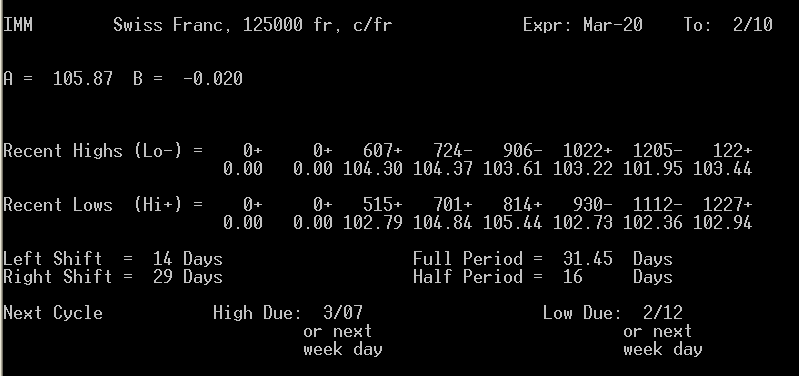
We are headed toward a cyclical high and a seasonal down period.
News Analysis
Point & Figure Chart
120.0|                                                                  T  2/10
     | IMM - Mar-20 Swiss Franc, 125000 fr, c/fr   Cm.=0.03  Lim.= 0.3
     |
     |
     | X
117.5|_XO______________________________________________________________________
     |OXO
     |OXOX                           X
     |OXOXO  X                       XO
     |OXOXO  XO  X                 X XO
115.0|OXOXOX_XO__XO________X_X_____XOXO________________________________________
     |O OXOXOXOX XO        XOXOX   XOXO
     |  OXOXOXOXOXO        XOXOXO  XO O
     |  OXOXO OXOXO        XOXOXO  X  O
     |  OXOX  O OXO        XOXOXO  X  O

     |  OXOX  O OXO        XOXOXO  X  O
112.5|__O_OX____O_O________XOXO_O__X__O________________________________________
     |    O     O O        XO   O  X  O
     |          O O    X   X    O  X  O
     |          O O  X XO  X    O  X  O
     |            O  XOXOX X    OX X  O
110.0|____________O__XOXOXOX____OXOX__O__X_____________________________________
     |            OX XOXOXOX    OXOX  O  XO
     |            OXOXOXO O     OXOX  O  XO
     |            OXOXO         O O   O  XO
     |            OXOX                OX XO
107.5|____________OXOX________________OXOXO____________________________________
     |            O O                 OXOXO
     |                                O OXOX
     |                                  OXOXO
     |                                  O OXO  X X
105.0|____________________________________OXO__XOXO____________________________
     |                                    OXOX XOXO
     |                                    O OXOXOXO
     |                                      OXOXO OX
     |                                      O OX  OX
102.5|________________________________________OX__OX___________________________
     |                                        OX  OX
     |                                        O   OX
     |                                            O
     |
100.0|----|----|----|----|----|----|----|----|----|----|----|----|----|----|---
                1111             111       1       1
      4456678889011211233555788991222226689213467882
      0200220120000300113001223012020120222112100021
      7953495667719035360496750734797507117070635539
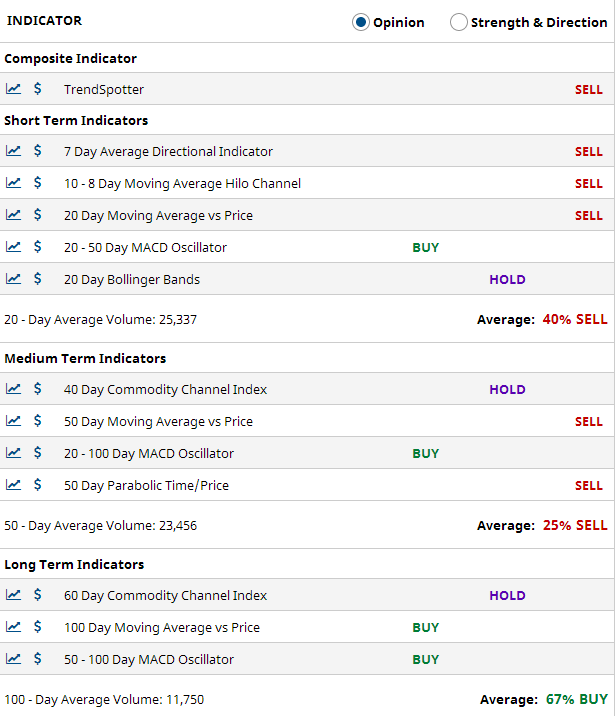
The above chart is giving a conventional sell signal.
Cyclical and Seasonal Factors
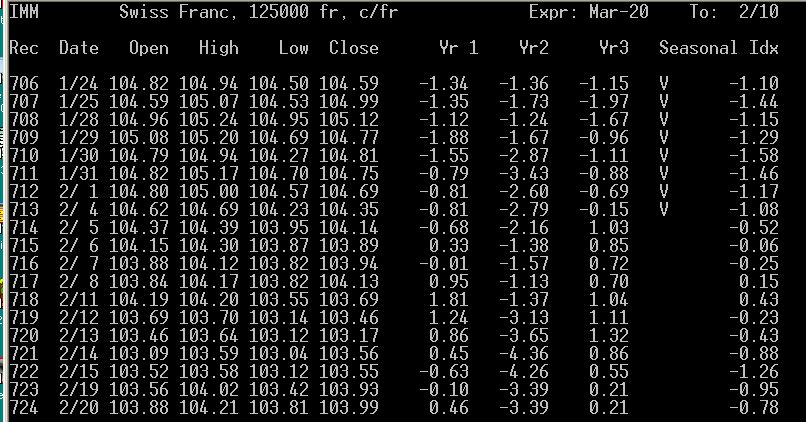
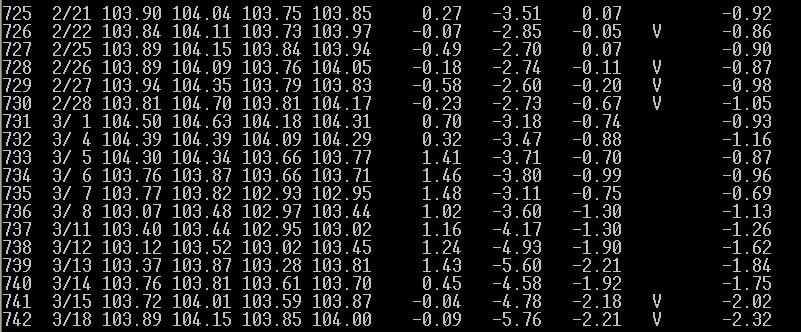
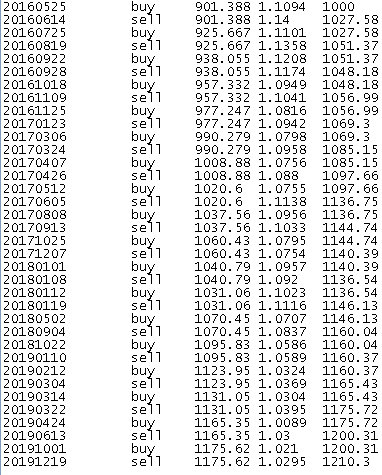
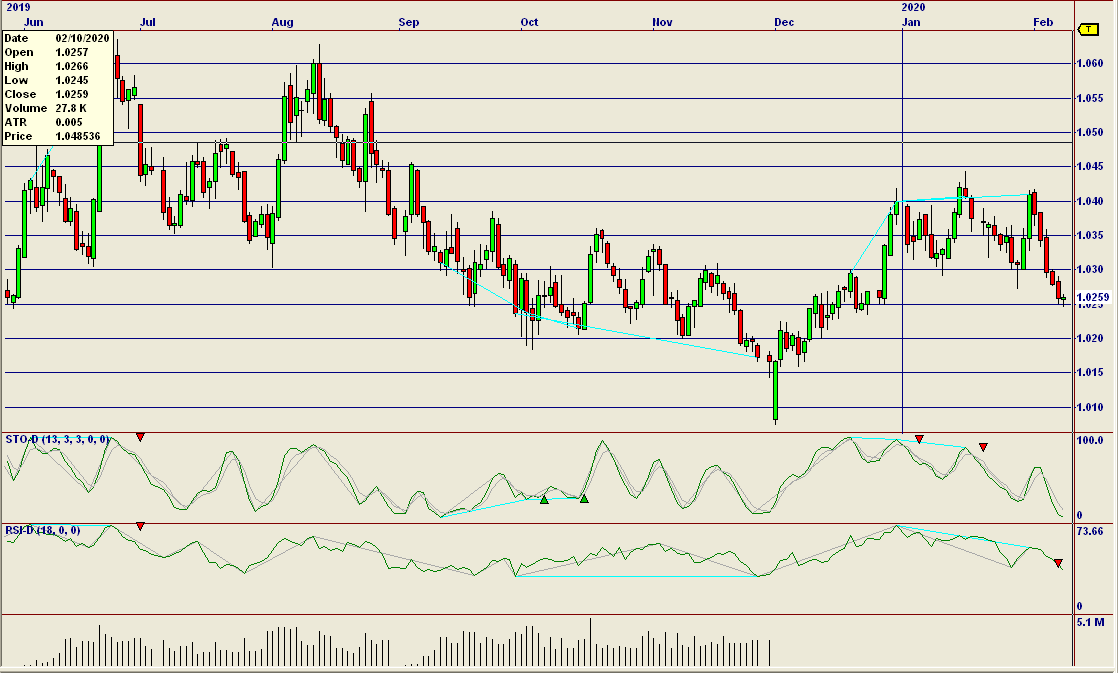
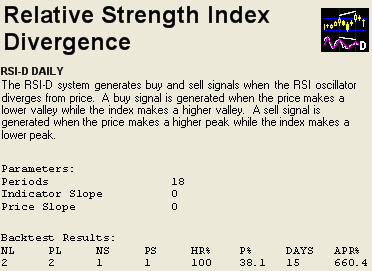
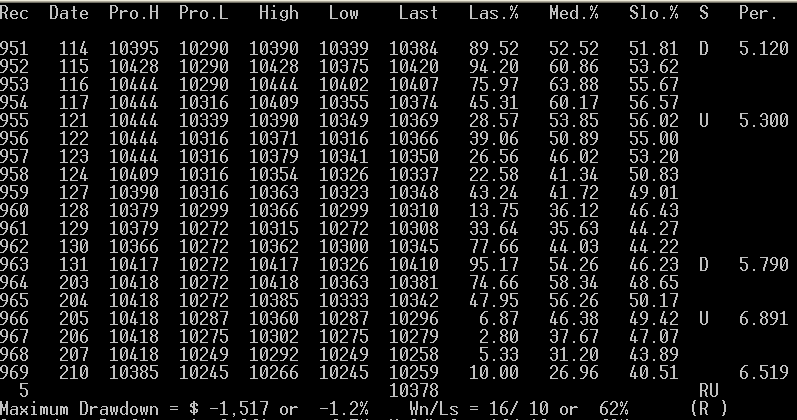
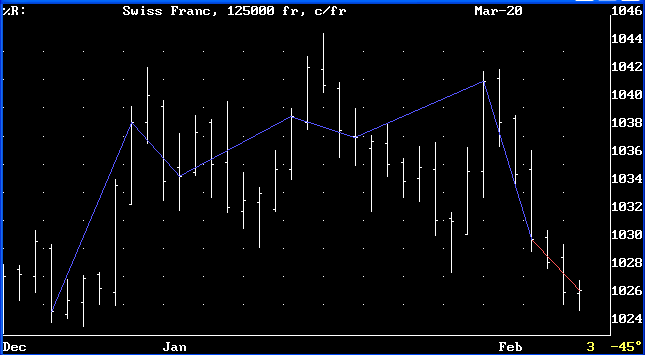
Our best-performing internal program is "%R". It is giving a buy signal.
Results of "%R" for Swiss Franc (blue lines = successful trades, red, unsuccessful):
(Always in the market.)
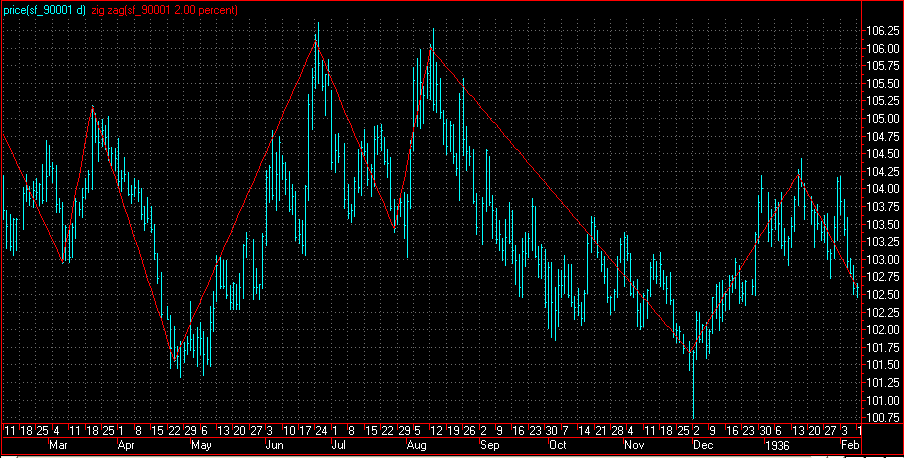
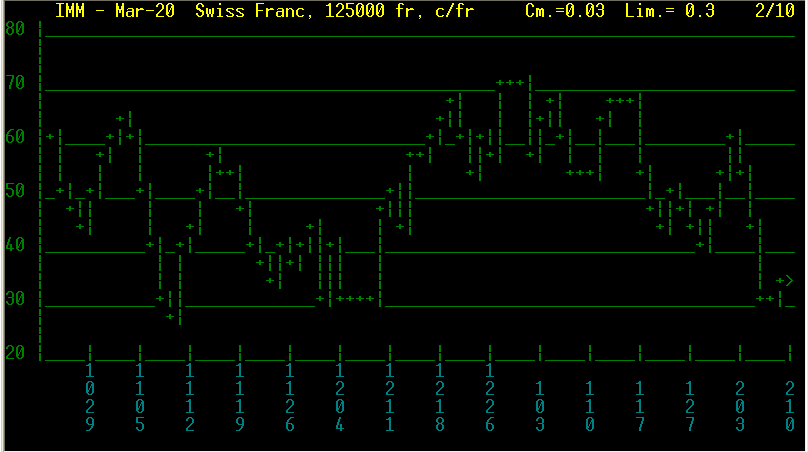
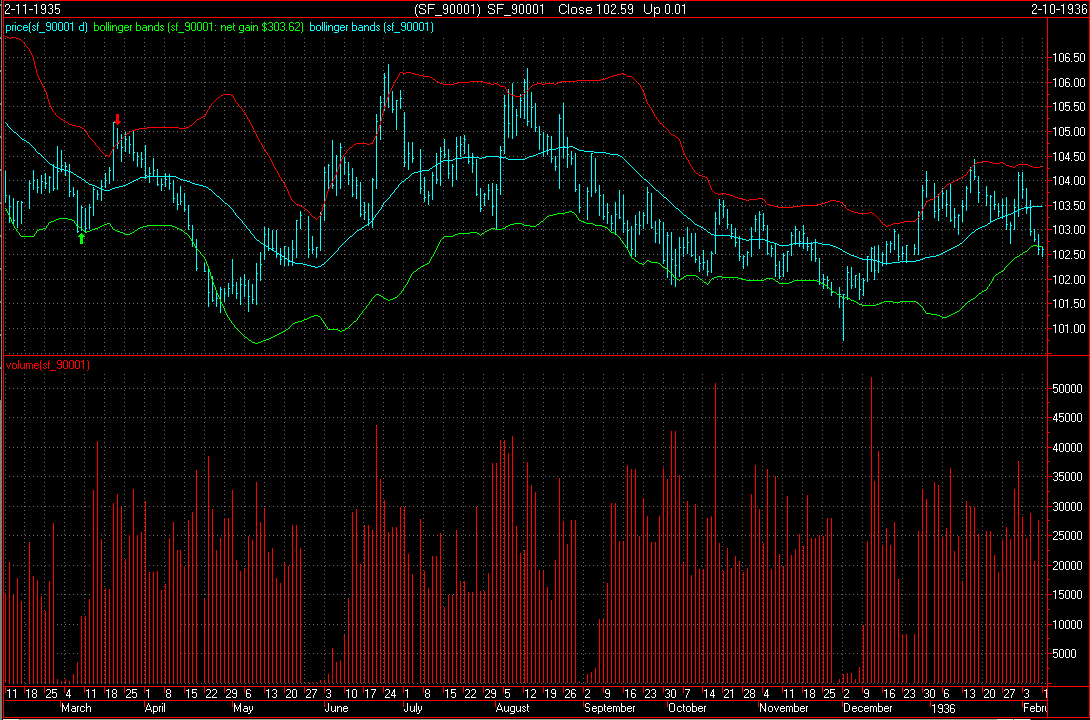
Our third system has triggered a sell signal. (Note, disregard the year on the chart. Our regular readers know this is not a Y2K-compliant system, but it still works.)
The point value is $1,250. Initial margin on a single contract is $3,410. Use of options is advised.
Scale traders are not a factor in this price range.
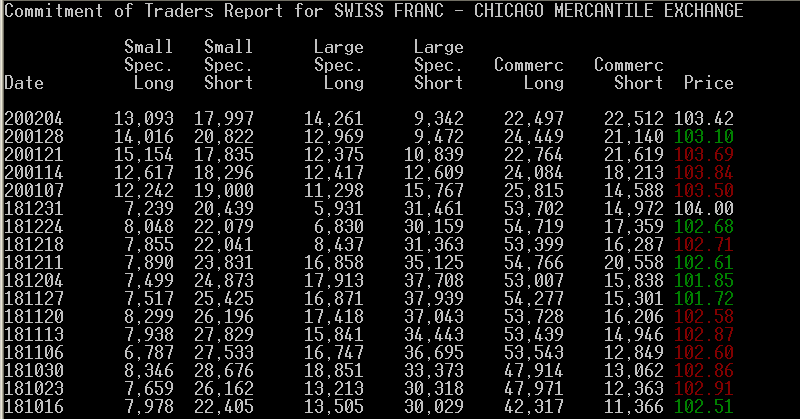
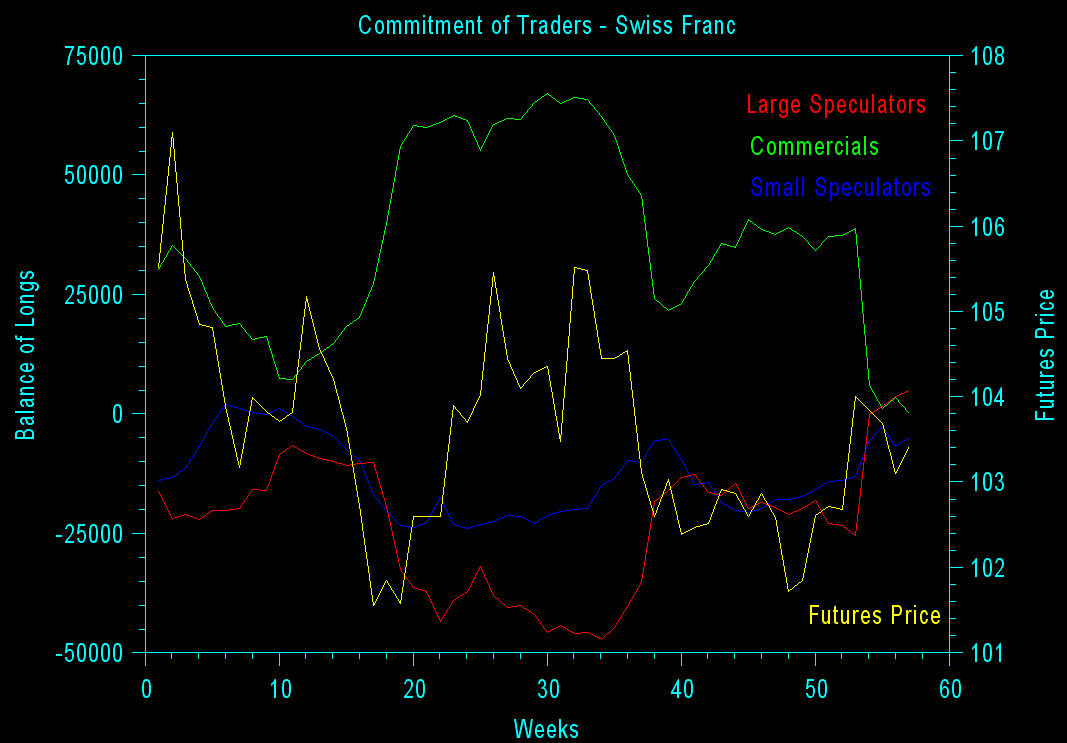
In the chart below, the yellow line is the futures price, read on the right axis. All other colors are read on the left axis. Blue is small speculators. Red is large speculators. Green is commercials. Large speculators with the best track record are getting increasingly-long.
Interpretation of a Different Site Below (Their trader categories may vary from ours):
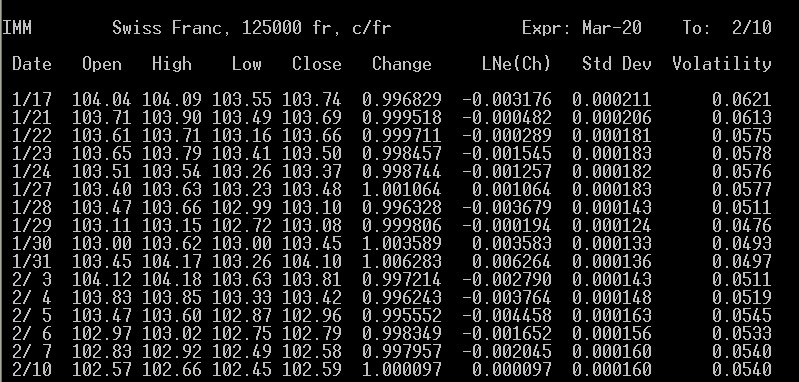
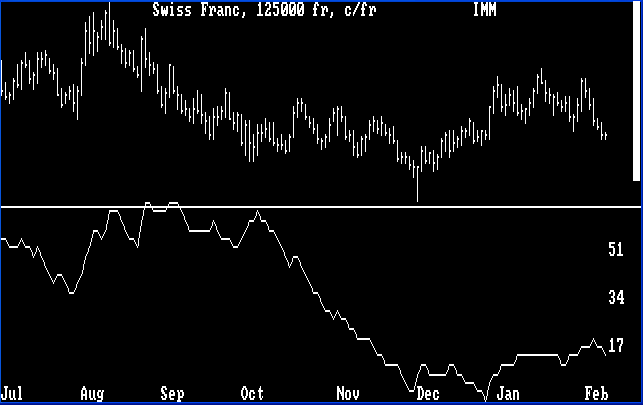
The average volatility shown below suggests that an uptrend remains intact from the last volatility low point.
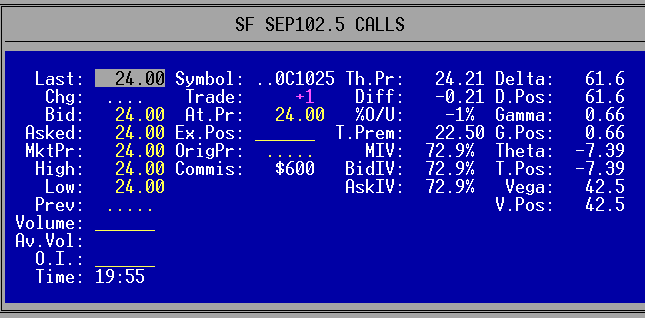
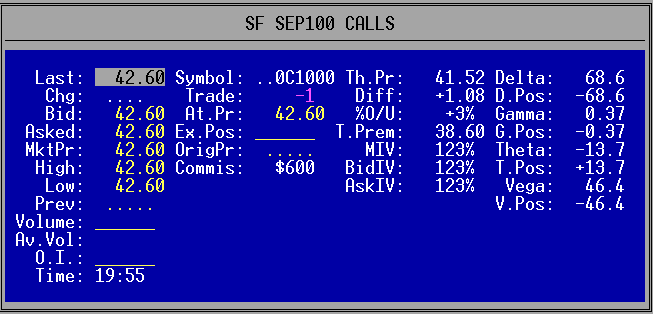
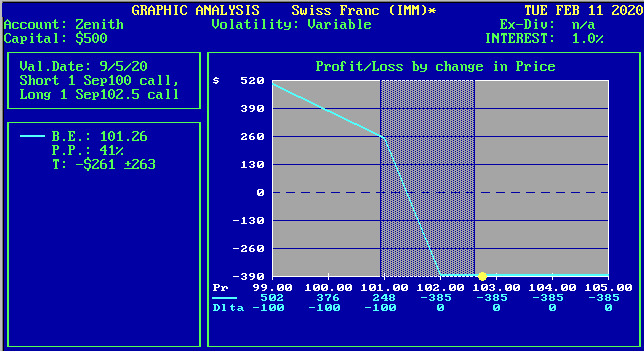
Our option trade recommendation is to Buy (1) Swiss Franc September 1.025 Call and Sell (1) Swiss Franc September 1.000 Call @ 0.186 to the Sell Side or Greater. Warning: Units on the above chart may need to be multiplied by a factor of 10 due to a software glitch.
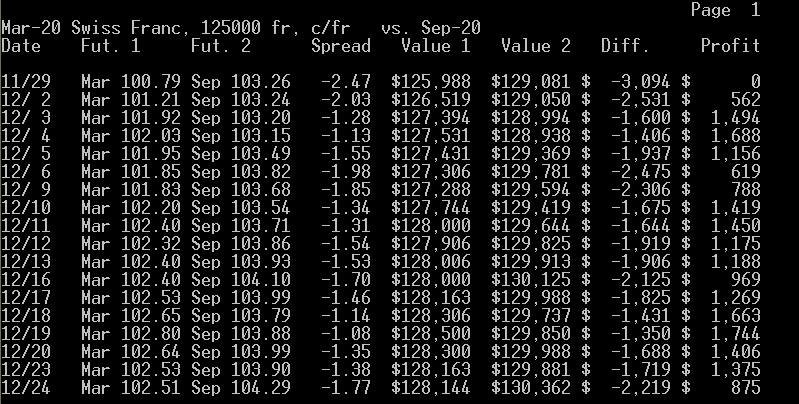
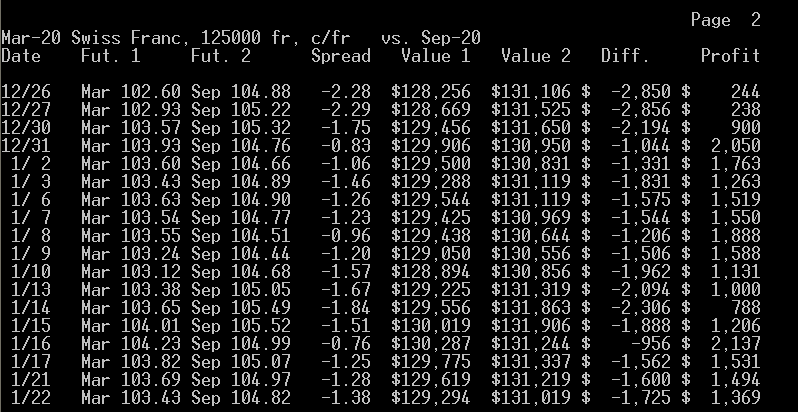
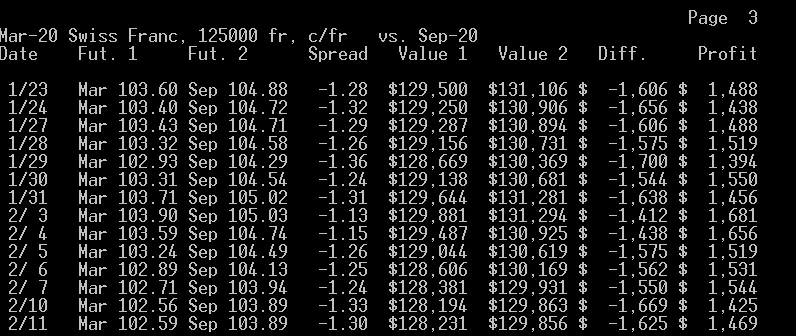
What the Mar. - Sep. calendar spread suggests to us is that buying the near contract and selling the far one is at most times profitable, which we think is a sign that these futures may go up in the long run. The best time to enter or leave the above spread is when it is at -1.75 or narrower buying the far as prices are rising and then selling the near, and exiting or entering when it is at -2.20 or wider selling the far as prices are falling and then buying the near. At this time, we appear to be midway with no particular trend detected in either direction.
To view the chart below correctly use Microsoft Internet Explorer.
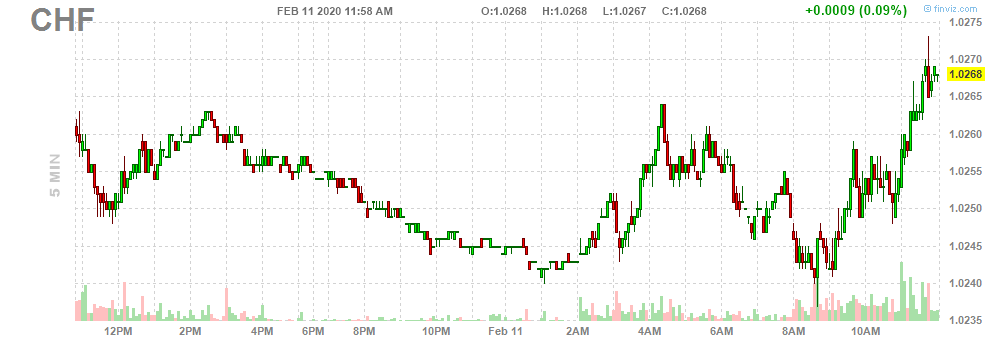
Here's an intraday chart for a previous day ( 7/11 ).
Internal Program
Third System Confirmation
Margin
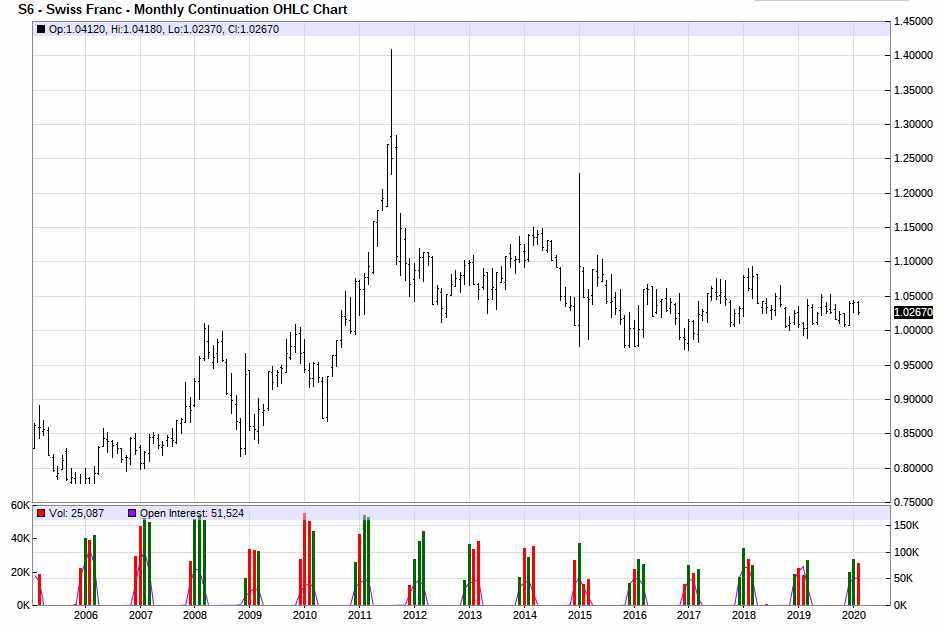
Historic Range
Commitment of Traders

Volatility / Probable Range
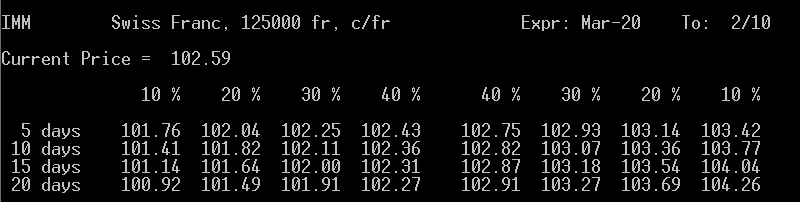
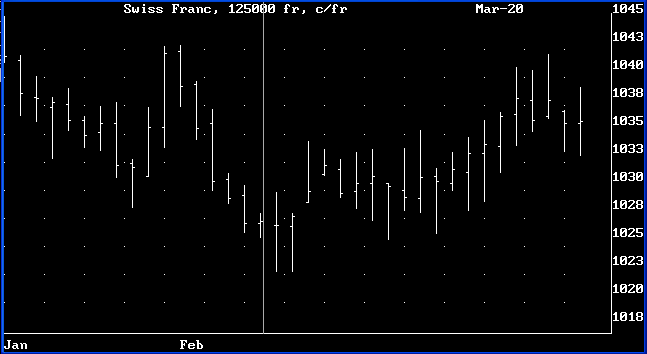
Possible Future Prices
Option Recommendation
Calendar Spread
Level Table:
107.0|                                                                  R  2/11
 IMM - Mar-20 Swiss Franc, 125000 fr, c/fr   Cm.=0.03  Lim.= 0.3
     |
     |
     |
106.0|KKN______________________________________________________________________
     |KKNN
     |KKKKNNNNN
     |KKKKKKNNNNNNN
     |KKKKNNNNNNNNNO
105.0|CJKKKNNNNNNNOO___________________________________________________________
     |CCCDJKKNNNNNNOO
     |CCCCCDHJKLLLMNNOOOOOO
     |BBCCCCDDHJJKKKKLLLLLMMMNOOOOOOO
     |BBCCDDDDDHHJJJKKKKLLLLMMMMOOOOOOPPY
104.0|ABBBBBCCDDDDHHHHJJJJJKLLLLLMMMOOOPPXYY___________________________________
     |AAAAAABBBCCCCDDDDDEHHHHJJJJJJKLLLLLMMOOPPXYYZZ
     |AAAABBBBCCCDEEHHHJJJJKLLMMMMMMOOPPPPPQXXXXXXYYYYZZZ
     |AABCCEEEEHJJLLLMMMMMOPPPPPQQSSXXXXXXYYYYYYZZZZZZ
     |AAABBBBCEEEHJJJJMMMOPPPPPPPQQSSSXXXXXXYYYYZZZZZZ
103.0|AAABBBBEHHHHHJJMPPPPPQQQQQQQSSSTTTXXXXYYYZZZ_____________________________
     |BBBEEGGHHHPPPQQQQQQQRSSSTTTTTUUWXYZZZZZ
     |EEGGGGGHHHHQQQQQQRRRRRRRSSSTTTUUUUUUWWXZZZ[
     |EGGGGGGGGHHHHHQQQRRRRRRRRSSTTTTUUUUWWWWWWWWWXXZ[[   <<<
     |EFGGGGGGQRRRRRRRSSSTTTUUUUVWWWWWWWW[
102.0|EEEFGGRRRRRRSSTTTUUVVVWWW________________________________________________
     |EEFFFGGRRTUUVVVVVVVW
     |EEFFFFFFFFFGUVVVVVVV
     |EEFFFFFFFGVVVV
     |FFV
101.0|V________________________________________________________________________
     |V
     |V
     |
     |
100.0|-A-B-C-D-E-F-G-H-J-K-L-M-N-O-P-Q-R-S-T-U-V-W-X-Y-Z----|----|-- TPO=-0.961
                                       1 1 1 1 1 1 1
       2 2 3 3 4 4 5 5 6 6 7 7 8 8 9 9 0 0 0 1 1 2 2 1 1 2           2
       1 2 1 2 1 2 0 2 0 2 0 2 0 1 0 1 0 1 2 1 2 1 2 1 2 1           1
       3 7 3 7 0 5 9 3 7 1 8 2 5 9 3 7 1 5 9 2 6 1 6 0 7 0           1
Other Factors
                 Risk Versus Opportunity Report
                ________________________________

                  SFH0    March Swiss Franc

                      High Price:  103.42
                   Current Price:  102.59
                       Low Price:  100.92

                            Risk: -0.016
                     Opportunity: -0.033

                    (O/R) Ratio =  2.012
